Three ways to read a grid
Numbers can be clues, positions or merge targets. Four puzzles show why the same grid shape can ask for very different reasoning.
A board of squares does not tell you what kind of puzzle you are solving. First decide what each square represents: a possible answer, a piece to move, a route segment or a number to combine.
This collection compares four rulesets so you can choose by the thinking involved rather than by the look of the board.
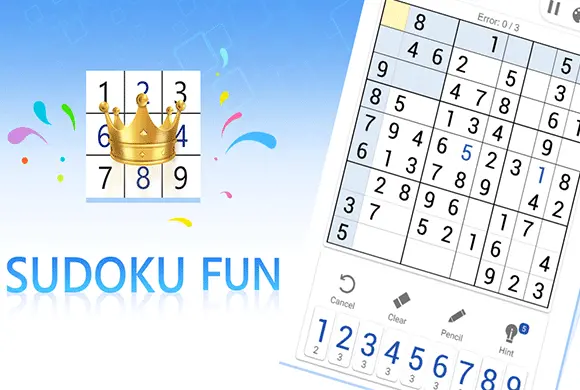
Sudoku Fun
Choose fixed-clue deduction: every committed number must fit three overlapping constraints.
Your goal: Complete the grid with no repeated number in any row, column or box.
Open game ↗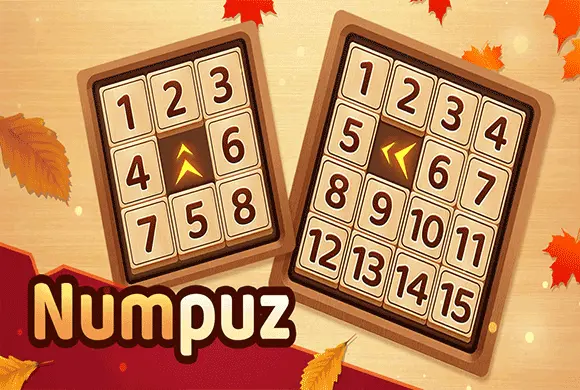
Num puz
Move the clues themselves, using the empty square as the route that makes a rearrangement possible.
Your goal: Arrange the numbers in ascending order from left to right and top to bottom.
Open game ↗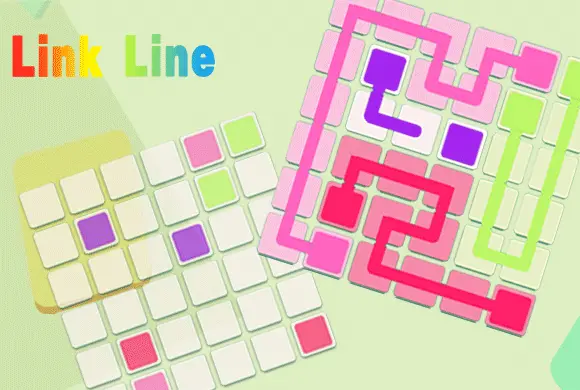
Link Line
Solve a coverage problem where a successful connection can still leave unusable space.
Your goal: Join all matching endpoints with non-crossing paths that fill every square of the grid.
Open game ↗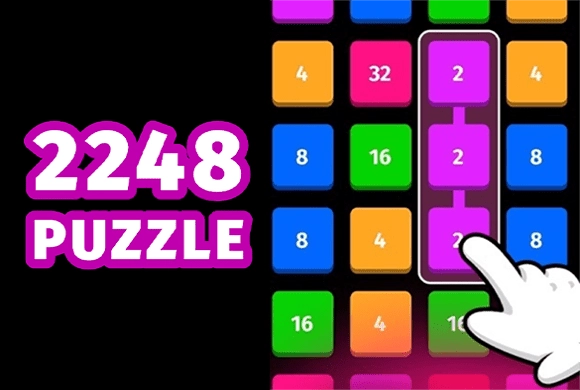
2248 Puzzle
Build a number chain while choosing a useful home for the merged result.
Your goal: Continue forming valid chains to create larger numbers while keeping connections available.
Open game ↗Fixed clues or moving pieces?
Sudoku Fun preserves the given clues while you eliminate candidates. Num Puz moves the numbers themselves through an empty square. A Sudoku habit of fixing one answer can help organize your thinking, but Num Puz also needs a route for the gap.
A path is more than a connection
Link Line requires every square to be covered, so the shortest connection may be wrong. In 2248 Puzzle, a chain merges at its endpoint, making the last square a decision about the next move. In both games, check what the path leaves behind.
Choose what you want the grid to mean
Choose Sudoku Fun when you want to work from fixed numerical clues, Num puz when moving one tile also relocates the empty space, and Link Line when each route competes for shared corridors. In 2248 Puzzle, the selected chain changes the value and location of a merged tile. Reading these constraints first prevents applying the habits of one grid game to another.